

With the rising costs of tuition, housing, textbooks, and daily expenses, finding a reliable and affordable laptop is essential for students. The ideal device should handle everything from note-taking and late-night writing sessions to group presentations and media editing, without breaking the bank.
This guide highlights the best laptops for students based on price-to-performance value, battery life, portability, and input quality. The top recommendation balances all of these factors, making it a solid choice for both high school and college use, whether for in-person classes or remote learning.
Additional options are included for those who prefer macOS or ChromeOS, or need to stay within a tighter budget. Lower-priced picks come with trade-offs like less storage or a bulkier design, but still meet the basic needs of schoolwork. Laptop prices move around a lot, so treat any price mentioned here as a snapshot from October 2026 and compare before you buy.
ASUS Zenbook A14
The ASUS Zenbook A14 is a strong choice for high school and college students who want a thin, lightweight Windows laptop without crossing the $1,000 mark. The linked configuration (UX3407QA) pairs a Qualcomm Snapdragon X processor with 16GB of memory, a 512GB SSD, and a 14-inch 1920 x 1200 OLED display, which is plenty for note-taking, video calls, paper writing, and light creative work.
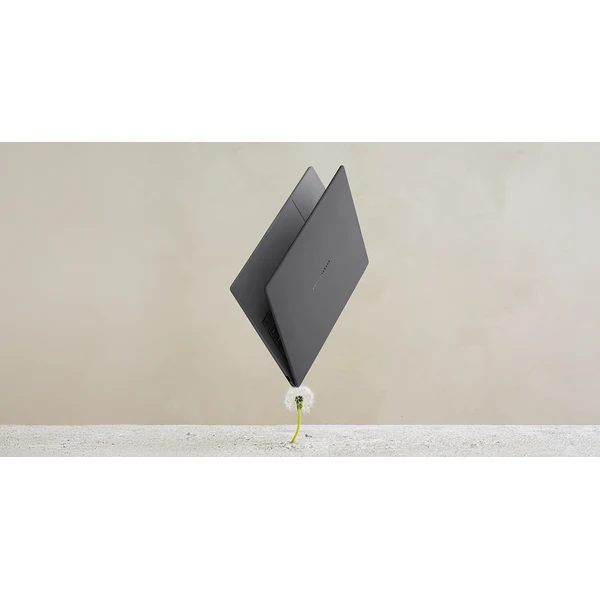 ASUS Zenbook A14A thin, light Windows laptop with a 14-inch OLED display, 16GB of memory and a 512GB SSD in the linked configuration.Buy on Amazon
ASUS lists the A14 at 2.16 to 2.40 pounds depending on configuration, with a 70Wh battery, and quotes more than 29 hours of video playback in its own testing. Real-world battery life with a brighter screen and more demanding apps will be lower, but it is built to last through long school days. Ports include two USB4 Type-C, one USB-A, HDMI, and a headphone jack, so you can charge over USB-C and still plug in older accessories.
The main trade-off is that it runs Windows on Arm. Browsers, Microsoft Office, and most everyday apps work well, but some older programs, games, and specialized school software (certain exam, lab, or engineering tools) may not run. Check your school's software requirements before buying. If you need full compatibility with every Windows program, the Acer Aspire Go 15 below uses a standard AMD processor.
Apple MacBook Neo (13-inch)
For students who prefer the macOS ecosystem, the 13-inch MacBook Neo is now Apple's entry-level laptop and the sensible buy for most budgets. It's well-suited for writing papers, conducting research, editing photos, and basic coding, and its compact size makes it easy to carry between classes.
 Apple MacBook Neo (13-inch)Apple's entry-level laptop: compact and light, with macOS for writing, research and everyday schoolwork.Buy on Amazon
The MacBook Neo uses Apple's A18 Pro chip with 8GB of unified memory and 256GB or 512GB of storage, a 13-inch Liquid Retina display, and weighs 2.7 pounds. Apple rates it for up to 16 hours of video streaming or up to 11 hours of wireless web browsing. Apple's list price starts at $699 for the 256GB model (October 2026), and Apple's Education Store offers student pricing on many Macs.
It comes with just two USB-C ports (one USB 3, one USB 2) and a headphone jack, so a USB-C hub may be necessary for connecting accessories. The 8GB of memory can't be upgraded later. That's fine for typical schoolwork, but students in video production, computer science, or other heavier workloads should look at the MacBook Air with M5, which starts with 16GB of memory and 512GB of storage (Apple list price from $1,299 in October 2026), or a MacBook Pro.
What about older MacBook Air models? Apple no longer sells the M1 or M2 MacBook Air new. The 2022 M2 Air listing we used to recommend is out of stock on Amazon, and the 2020 M1 Air now mostly shows up as renewed units priced above a brand-new MacBook Neo, so we no longer recommend either one.
Acer Aspire Go 15
The Acer Aspire Go 15 is a dependable, budget-friendly Windows 11 laptop for students who need a reliable machine for classwork, research, and multitasking. It isn't the sleekest device on the market, but it gets the basics right.
The linked configuration (AG15-42P) has an AMD Ryzen 7 7730U processor, 16GB of RAM, and a 512GB PCIe Gen4 SSD, with a 15.6-inch 1080p IPS display. That is more memory and storage than many laptops at this price, which helps when you have dozens of browser tabs, a video call, and a document open at once. Because it uses a standard AMD processor, it runs the full range of Windows software. The trade-off is size: a 15.6-inch laptop is less portable than the 14-inch and 13-inch picks on this list.
Already have an older laptop that can't upgrade to Windows 11? You may not need to replace it yet. Windows 10 support ended on October 14, 2025, so it no longer receives regular security updates, but a free Linux distribution like Ubuntu can keep older hardware useful and up to date for browsing, writing, and video calls. Just confirm that any software your classes require works on Linux first.
ASUS Chromebook Plus CX14
Chromebooks are a great option for students who don't need specialized Windows or macOS software. They're ideal for tasks like writing papers, taking notes, joining video calls, and streaming media, as long as the work can be done through a browser or Android apps. Compared to similarly priced Windows laptops, Chromebooks tend to feel faster and simpler to use.
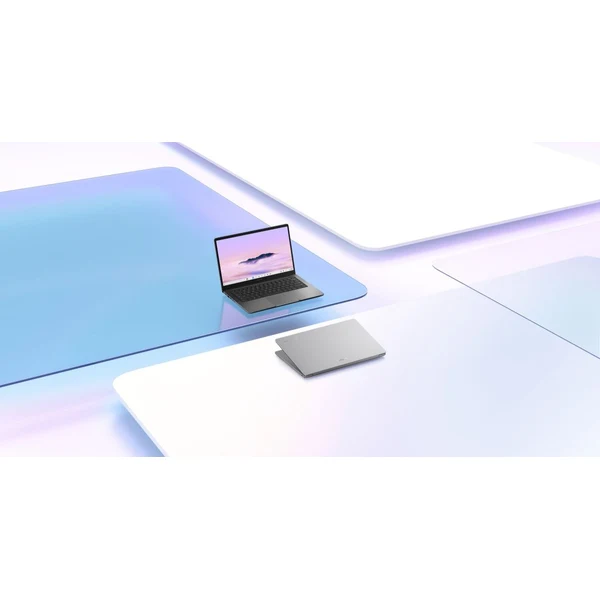 ASUS Chromebook Plus CX14A current Chromebook Plus with an 8-core Intel Core 3 N355, 8GB of memory, 256GB of storage and a 14-inch touchscreen in the linked configuration.Buy on Amazon
The ASUS Chromebook Plus CX14 is a current Chromebook Plus model with an 8-core Intel Core 3 N355 processor and 8GB of memory. The linked configuration (CX1405CTA) has 256GB of storage and a 14-inch 1920 x 1080 touchscreen; ASUS also sells it with 128GB of storage and a non-touch anti-glare display. It includes Google AI features with Gemini built in, Wi-Fi 6E, and a 42Wh battery, and it starts at 3.06 pounds. On the 128GB version, plan on keeping large files in Google Drive or on a USB drive.
The Lenovo IdeaPad Flex 5i Chromebook Plus we previously recommended no longer appears on Lenovo's US store, and the remaining Amazon listings come from third-party sellers at prices that no longer make it a good value.
ASUS Vivobook 14
For students who require Windows on a limited budget, some trade-offs are necessary. Many of the cheapest Windows laptops ship with only 8GB of RAM and 128GB of storage, which fills up quickly. When shopping in this range, avoid outdated processors, limited memory, and low-resolution displays, and aim for at least 16GB of RAM and 256GB or more of storage if you can.
The ASUS Vivobook 14 (X1407QA) clears that bar. The linked configuration has a Qualcomm Snapdragon X processor, 16GB of memory, a 512GB SSD, and a 14-inch full HD IPS display, plus a larger touchpad and an FHD IR camera with face sign-in. It's a Copilot+ PC running Windows 11 Home.
Like the Zenbook A14, it runs Windows on Arm, so double-check that any required school software supports it. The display is a standard IPS panel rather than OLED, and the build is plainer than ASUS's Zenbook line, but for everyday schoolwork it's a sensible way to get 16GB of memory without paying mid-range prices.
Choosing the right laptop as a student doesn't mean spending a fortune. Whether you prefer Windows, ChromeOS, or macOS, there are reliable, budget-friendly options that can handle everything from research and writing to video calls and light editing. Prioritize the features that matter most to your needs, like battery life, portability, or software compatibility, and you'll find a device that can carry you through the school year and beyond.